Showing posts with label friday photo. Show all posts

Monday, August 6, 2012

Monday Photo: Pink Komon

I don't think I have posted this one yet!


No fascinating story behind it or anything -- it's just a pretty spring kimono with a pattern of peacock feathers and various flowers in shades of pink, blue, and purple. These pictures don't really do it much justice.

Wednesday, November 23, 2011

Friday Photo (a bit early!): Kanzashi Comparison


I made this photo nice and bit in the hopes that you could read the rule easily.

Since I'm going to be away this weekend for Thanksgiving I thought I would post the Friday Photo early.

On the left in this picture you see my largest formal non-maiko kanzashi, and on the right you see my sakkou kanzashi. For the record, I have other formal non-maiko kanzashi that are smaller than this one, and my other full-sized maiko kanzashi (my firework kanzashi) is about the same size as the sakkou one. The size difference is HUGE -- the maiko kanzashi is almost a solid three inches larger in diameter than the non-maiko kanzashi. To me they never really look that huge on maiko when I see pictures of real maiko wearing them...I think it's the hair, really. Maiko hair is just so huge the kanzashi doesn't look that big in comparison.

Anyway, I just thought that was kind of a fun picture. So if you're thinking of dressing as a maiko for Halloween or cosplay or just for fun, remember: The bigger the kanzashi the better, especially if you're wearing an authentic maiko hairstyle.

Sunday, November 20, 2011

Friday Photo (a bit late): Sakkou Kanzashi


Folks who follow the maiko world got a couple of eyefuls of this kanzashi back in late 2009-early 2010, since this was the kanzashi worn by several of the maiko who debuted as geiko during that time -- including the famous Kikuyu and my personal favorite, Mamechiho.

For folks who don't follow the maiko and geiko world, sakkou is a special hairstyle worn by young maiko in the weeks leading up to their change from maiko to full geiko (geisha). Maiko typically wear kanzashi that vary according to season, with a new kanzashi set each month. But with sakkou they typically wear special kanzashi that aren't in a particularly seasonal design. Many sakkou kanzashi feature one or more cranes.

This particular kanzashi was on sale at Kazurasei when I went to Kyoto with my parents in December 2009. I had seen pictures of Kikuyu and Mamechiho wearing it and really wanted to get a look at one up close, maybe even buy one...and I did! The lady in the shop that day was pretty surprised that I recognized the kanzashi and knew the names of some of the people who had worn that style. Sadly, this particular kanzashi never got worn by a maiko, but it is still one of the style in use that year. I don't suppose anyone knows the name of any other maiko who wore this style?

Saturday, August 27, 2011

Friday Photo: Tayuu Kanzashi


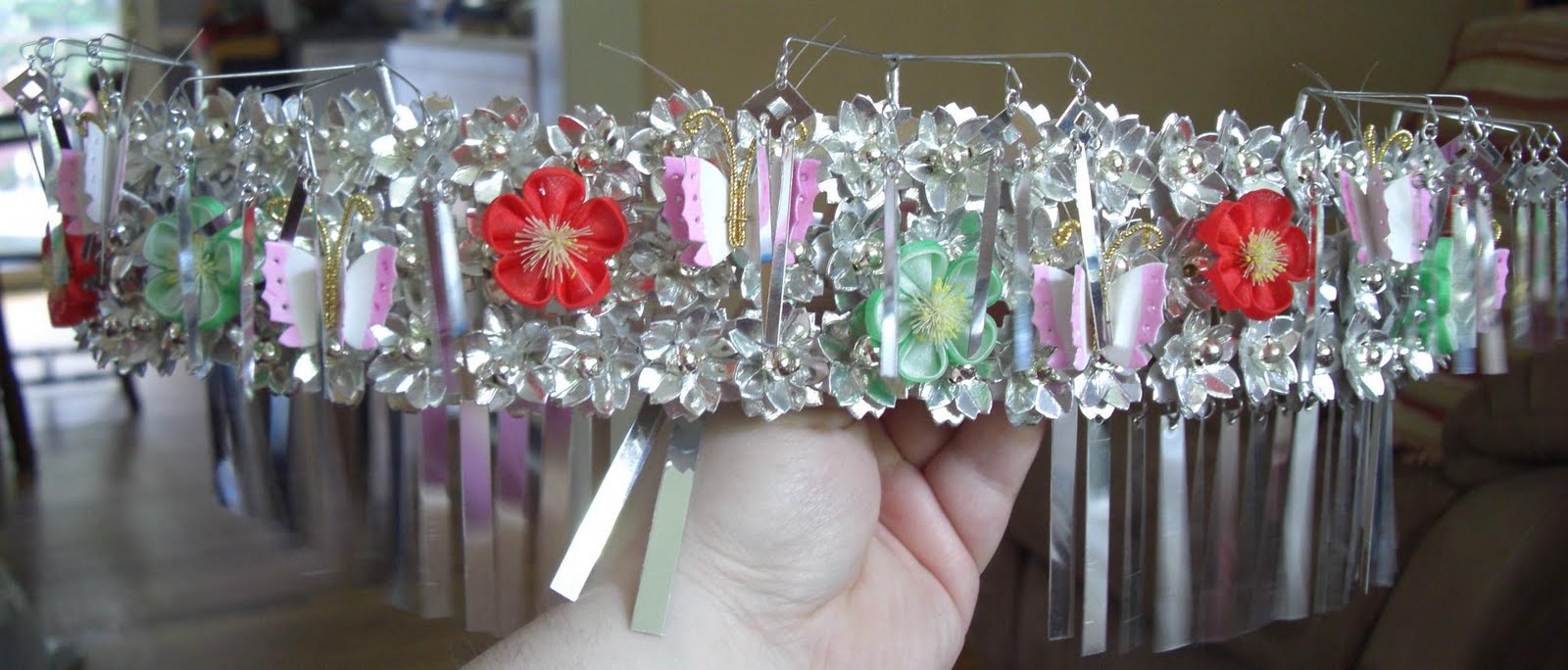
First of all, it is actually still Friday here in balmy Hawaii, so yes this still counts for a Friday photo (barely) :p Second of all, the kanzashi we'll be talking about today is hell to photograph because it is so darned BIG. Just for reference in that top picture, the widest part of my hand (when I attempt to scrunch it up the way it was while holding the kanzashi) is 3-3.5 inches/7.6-8.9cm across. So this thing is enormous. I mean like, gigantic.

Anyway.

I currently only know of one shop that sells these, and I discovered it quite by accident. Back in 2007, when I was first in Japan, I found Ikuokaya, also by accident. At the time I figured they sold nice kanzashi and their maiko stuff looked pretty authentic to me, and the folks there were nice, so I bought myself a nice stash. A few days later a friend of mine from the language program I had been on before going to Kyoto had some time off, so she came out to Kyoto for the weekend. She wanted to get some kanzashi too, so we went shopping at Jyuusanya (where we bought so much that the next time I went back I could see where they had tried to disguise the gaps in their display) and then decided to stop in at Ikuokaya before going on to our main entertainment for the evening: a maiko dinner at a local ryokan. Some inns and hotels have dinner shows where a maiko or geiko will make a brief appearance and perform for the guests, then leave. For many tourists, this is the closest thing to an ozashiki they will ever experience. Anyway, the maiko dancing that night was Miyoharu, and when it was our turn to have a little chat with her she noticed our Ikuokaya bags and mentioned that she knew the place because she shopped there. Well, that's about the best endorsement you can get for a shop. The next night I stopped in for a third time and wound up in a conversation with the owner's son. Now, if you ever go to Ikuokaya you will notice that they have several pictures of various maiko and geiko displayed around the shop. These are in fact pictures of customers. I noticed one picture of a tayuu amongst the maiko and geiko pictures, and asked the owner's son if she came there too. Oh yes, he told me, she comes here too. So I decided to be bold and asked if they had a tayuu kanzashi in stock, and if I could look at it. It turned out that they did indeed have one in stock, and I did indeed get to look at it. Though I definitely couldn't buy it at that time (and later developments tell me they wouldn't have been able to sell it to me anyway if I had asked), I decided that someday I would own one of those too.

Fast forward a little over two years, to the end of 2009-beginning of 2010. I had been living in Japan for several months at that point and had managed two more trips to Kyoto, one a vacation in April of 2009 before moving there to work and the other a short weekend away during Silver Week that September. I always stopped in to Ikuokaya to chat and pick up new pieces. During that winter trip I decided the time was ripe to treat myself to a tayuu kanzashi. So I stopped by to ask about getting one...and found that none were in stock! Turns out that they're a special-order item. Which, when you consider that there are only like four tayuu left in the entire country, it kind of makes sense. So I waited a few more months, thought about it some more, then contacted the folks at Ikuokaya to ask about having one made. Now, these folks are sweet and treat their customers amazingly, and by now they were pretty used to my craziness when it comes to kanzashi, but even they were thrown for a loop by this request. But they rose to the challenge, and by the time I returned to Kyoto for the last time in late July, my kanzashi had arrived and I was able to pick it up. The piece wound up traveling up to Aomori with me before I got the chance to carefully pack it up and ship it home, where it was waiting for me when I arrived.

For the curious, I actually can't tell what it's made of. It looks like metal but is surprisingly light-weight. The butterflies are made of some sort of fabric card and have little antennae.

So, the moral of the story is: If you need something kanzashi-related ask the folks at Ikuokaya, because they can probably get it for you, even if it's a tayuu kanzashi. Also, if you're willing to spend the money you can get ALMOST anything you want in Kyoto*.

*No amount of money alone will get you into an exclusive teahouse for an ozashiki with maiko or geiko. This is because of the no first-timers rule. But...you may notice that I only said you can't get into an exclusive teahouse. I never said you can't hire maiko or geiko ;)

Friday, August 19, 2011

Friday Photo: Purple Furisode


This is one of the first kimono I ever bought, and is one of the few new ones in my collection. On my first trip to Japan I managed to find the Mimuro shop in Kyoto. It's down little back streets off of Shijo-Dori and can be tough to find, but if you can get there during a sale it's worth it. We're talking multiple floors of everything from yukata (at least in the summer) to tomesode and furisode, for all ages. The time I went they were having a huge sale, and I managed to get this furisode, a fukuro obi, a juban, an obi age, and two obi jime for $700 -- about half the cost of the furisode alone when it was being sold at full price. Not only that, but I got a tour of the other floors and their other goods, completely with getting to see an unfinished all-shibori furisode worth around $20,000 at the time, while waiting for my things to be packed and my payment to be processed. The whole trip was a lot of fun, and was one of my first experiences with the fun experience of surprising people by being a white chick who knew things about kimono (seriously, walk into a kimono shop or the wafuku floor of a department store and start asking for kimono-related items by name. It's awesome).

Saturday, August 13, 2011

Friday Photo: (Baby You're A) Firework...kanzashi


From top to bottom: Maiko fireworks kanzashi, maiko fireworks kanzashi with optional tassel added, and mini fireworks kanzashi. As you can see, the maiko version includes three of the mini kanzashi.

I bought the mini version first, actually, on my first trip to Japan in 2007. I bought the larger maiko version on my second trip in 2009. The folks at Ikuokaya (where I bought both) told me that the loop on the underside of the maiko version could be used to add a tassel to the piece for more junior maiko, and offered me several different color options for the tassel. I wound up choosing pink (even though they offered blue and my favorite color, purple) after it got the Obaasan Seal of Approval from an older woman who came into the store while I happened to be there and wandered over to see what the crazy foreign chick was doing with the maiko kanzashi and tassels. Trust me, when something in Japan gets the Obaasan Seal of Approval, it's usually a good idea to go with it. Plus the pink makes a nice contrast with the blues and purples, and brings out the pink in the iridescent jewels.

Friday, August 5, 2011

Friday Photo: Summer Komon


Just a pretty summer piece I picked up a couple of years back. No interesting story to it, sadly, but it certainly is nice and airy and puts you in a cool frame of mind. Great for dealing with summer heat, right?

Saturday, July 16, 2011

Friday Photo (on Saturday!): Custom Yukata


This is the custom yukata I had made for me while living in Japan. It's also probably my favorite yukata, just because it is made for me (and finding the bolt of fabric in the shop was super-exciting). It is mostly off-white and shakes of purple and pink, with a tiny bit of yellow added to some of the flowers. The pattern includes lilies, pinks, morning glories, and what I believe is hagi (darned if I can remember the English name for hagi...). I like to wear it with a cheerful yellow obi to bring out the yellow in the flowers.

Friday, July 1, 2011

Friday Photo: Uchikake


A little pic-heavy today, but there's just so much going on with this uchikake that it's pretty much the only way to show it all. 


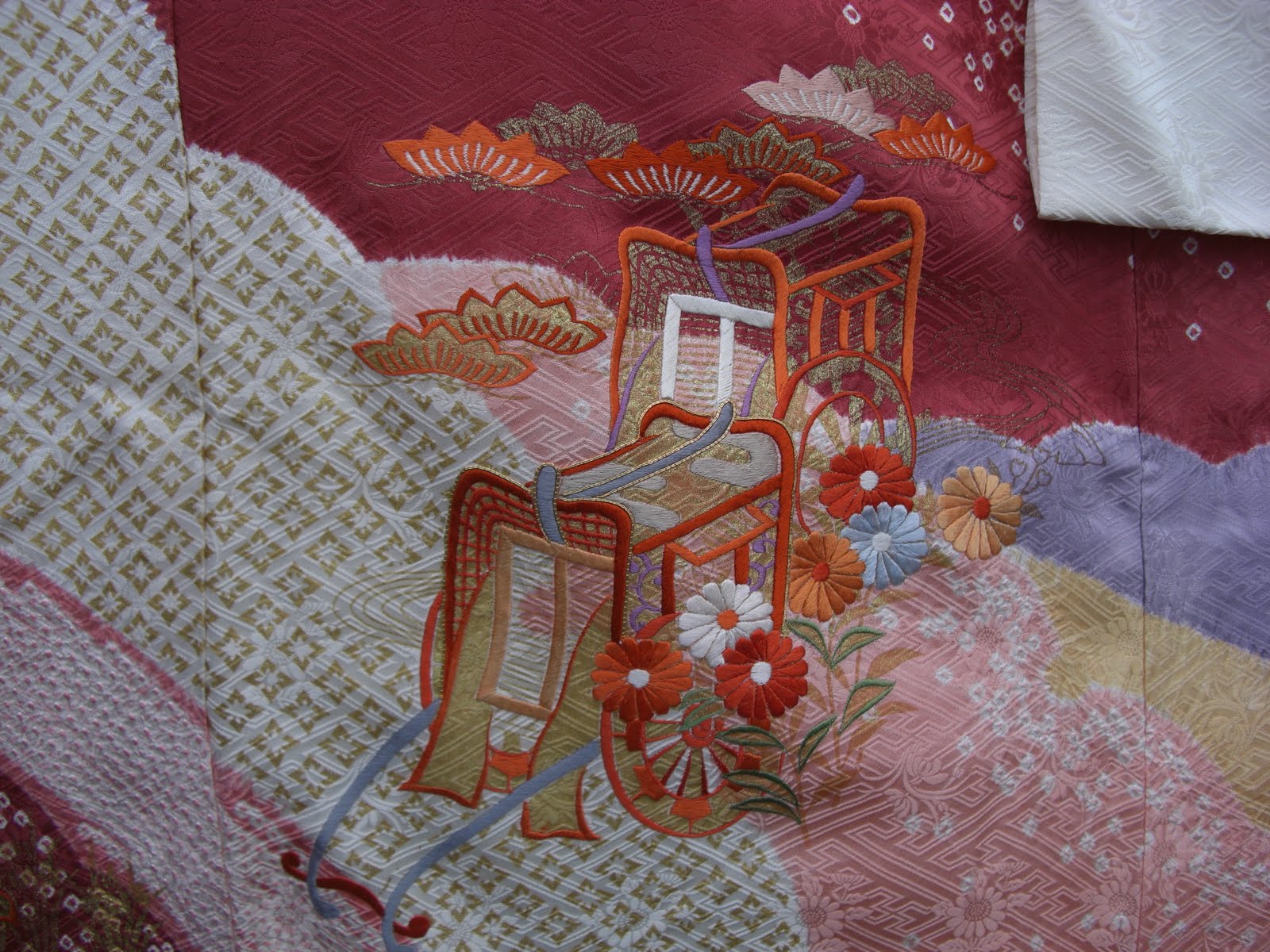
Here we have an uchikake in near-perfect condition. I think there's like...one snag somewhere on it. Based on the motifs and weight this is mostly a fall-to-spring piece and is covered in fans, cherries, wisteria, mandarin ducks, royal cart wheels, chrysanthemums, bell flowers, various water forms, things I think are pine and partial snowflakes (though those might also be grasses), and various abstract patters in the background. The base colors fade from the red spectrum to the blue spectrum. The sleeves and body have colorful false layers along the edges, even at the fronts of the sleeves (which are open most of the way down). And the hem on this thing is HUGE. The whole thing is quite heavy.

I remember the day I gave a presentation on kimono to my Japanese class. I had this at the time and decided to bring it. I had to haul it to school in the suitcase I usually reserve for things like month-long trips and moving to new places.

And speaking of moving, next week I'll be moving to a new state! It's all very fun and exciting, but it also means I might not be able to make any posts next week. I'll pick up with posting again as soon as possible though!

Friday, June 24, 2011

Friday Photo: (Possible) Geiko Hikizuri


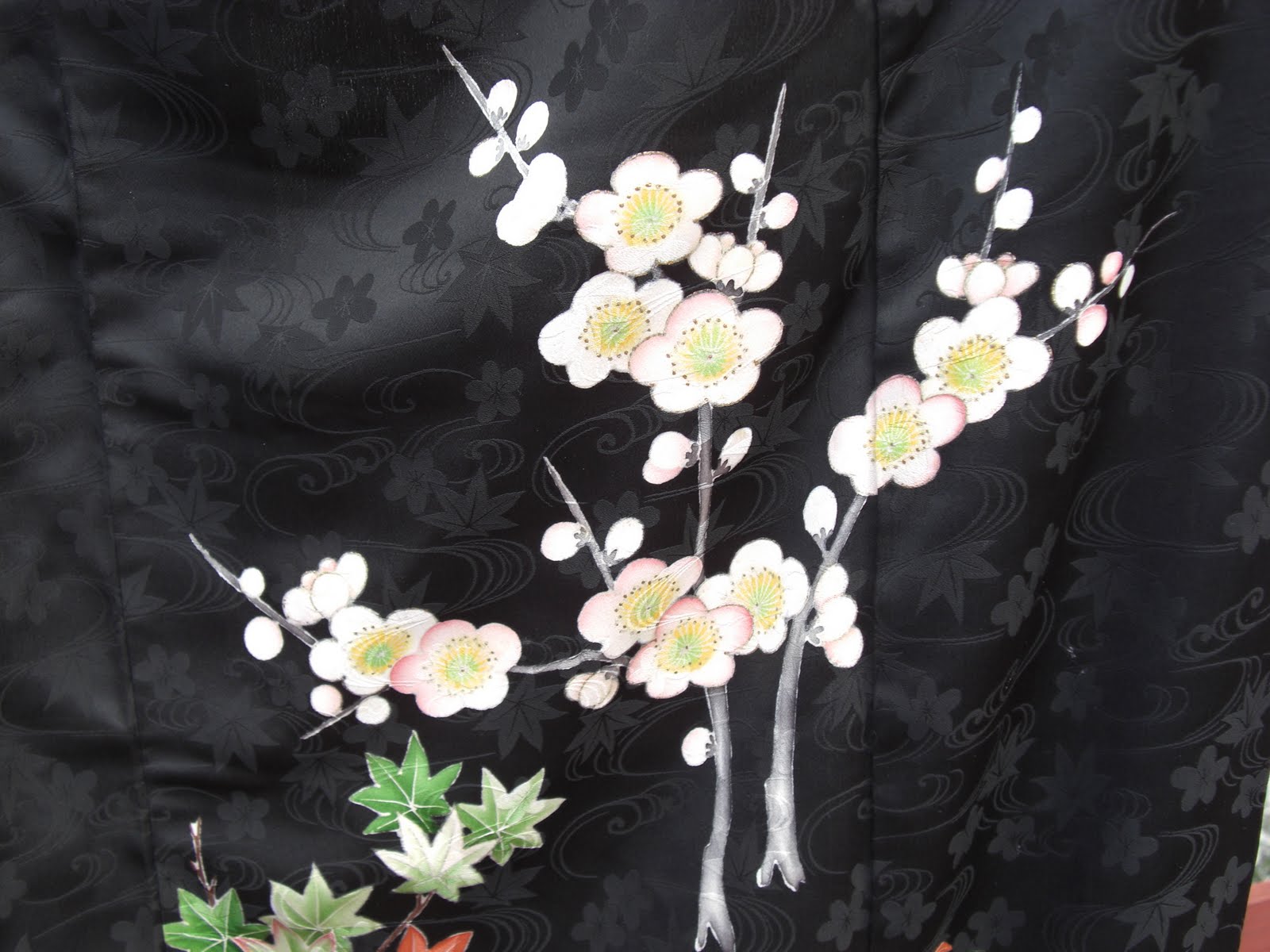
My first ever hiki! I'm so proud of it. The seller claims it was from an okiya in Kyoto that closed, so I have no way of verifying anything else about it. It's definitely long enough to be a hiki though, geiko or otherwise. A commenter on my Flickr pointed out that red linings aren't all that common for Kyoto geiko hikis -- and this one has a lovely red lining that is amazingly soft to the tough. The design features a waterfall with chrysanthemums, maple leaves, bamboo and plum blossoms. It's hard to tell in these pictures, but the plum blossoms have a lovely soft pink tint to them that blends well with the rest of the color scheme, which is actually more vibrant in real life than in any pictures I have.

And that's pretty much all I know about my hiki! If anyone else knows anything I would love if you woudl share the info with me!

Friday, June 17, 2011

Friday Photo: Furisode Kanzashi


Not all tsumami kanzashi are made for maiko. In fact, mot department stores (and non-maiko-oriented kanzashi shops like Jyuusanya in Kyoto) sell generic tsumami kanzashi meant for regular everyday people to wear with their more formal outfits. This is an example of that kind of kanzashi. While they may be smaller than maiko pieces, they can be just as elaborate and just as expensive. This particular design is quite formal and could be worn with a furisode. That said, I can't tell if it has a specific season or not. It looks rather spring-like to me though. This kind of kanzashi is also common in maiko henshin shops, where they are used in place of authentic maiko kanzashi.

Want to wear a kanzashi like this but don't have a furisode? If you're feeling bold, you could try some agejo-style yukata wearing. Agejo style is usually very elaborate and over-the-top, and I have stumbled across at least one agejo yukata style magazine that advocated wearing kanzashi like this one with your yukata ensemble for a more maiko-like look.

You can buy kanzashi like this on the kimono/wafuku floor of many Japanese department stores, or on the internet at places like eBay, Etsy, and Maya kanzashi (I actually have a couple of Maya sets). In Kyoto, in addition to the department stores, try Jyuusan-ya or any of the kanzashi shops in Gion. While they all sell maiko kanzashi, they also sell kanzashi for the non-maiko crowd as well.

Friday, June 10, 2011

Friday Photo: Furisode from Sendai


This is actually the first furisode I ever bought. I found it in a little second-hand kimono shop in Sendai on my first trip to Japan in 2007. The design is a combination of dyed sections, embroidered patterns, sections died in the shibori technique, and designs stamped in gold and silver. I have been told by the folks at Ikuokaya that the the dyed section is done in a style that was used for paper in the Heian era.

Friday, June 3, 2011

Friday Photo: Asagao


And now for something completely different...

In addition to kimono, I have been collecting kanzashi for several years and have acquired some interesting pieces. Well, I think they're interesting anyway. One of my newer acquisitions is this asagao (morning glory) kanzashi from one of the three shops in Kyoto that sells authentic maiko and geiko items. This particular one is a mini version of what the real maiko would wear. This size of flower might be used in a bunch with two other flowers or might be used for the larger bridge that goes across the back of the head. I don't know if that would be done with asagao kanzashi specifically, but I have seen it done with flowers like sakura, ume, and ayame (cherry, plum, and iris for those who may be wondering). Maiko-style asagao kanzashi typically come in like pink, light blue, or light purple. This particular design was made for the 2010 season and sold by Kintakedo -- for the curious, this is the same shop that supplies the folks at Hannari-ya with their maiko kanzashi.

In other unrelated news, for those who may be considering joining the RPG I mentioned in my last post, it's pretty much ready to get up and running now. There are only a few minor tweaks left to be made. We just need more people since right now it's just...well, me. Any questions about the RPG can be left here for me or you can PM me on the site (which is here).

Friday, May 27, 2011

Friday Photo: Custom Summer Komon


I believe I may have mentioned my custom kimono before. This is one of them. It was the first one I ever had made, and I kind of stumbled into it by accident. See, shortly after arriving for my year in Japan back in 2009, I made my way to the city a few train stops over to go to the mall. And in said mall I discovered a small branch of the Sagami chain (I think it's a chain anyway) of kimono shops. They happened to be having a sale to get rid of the remains of their summer-weight fabrics, since we were about to enter fall, and it just so happened that they had enough of this fabric to make a kimono in my size. And that's how I wound up with my first custom kimono.

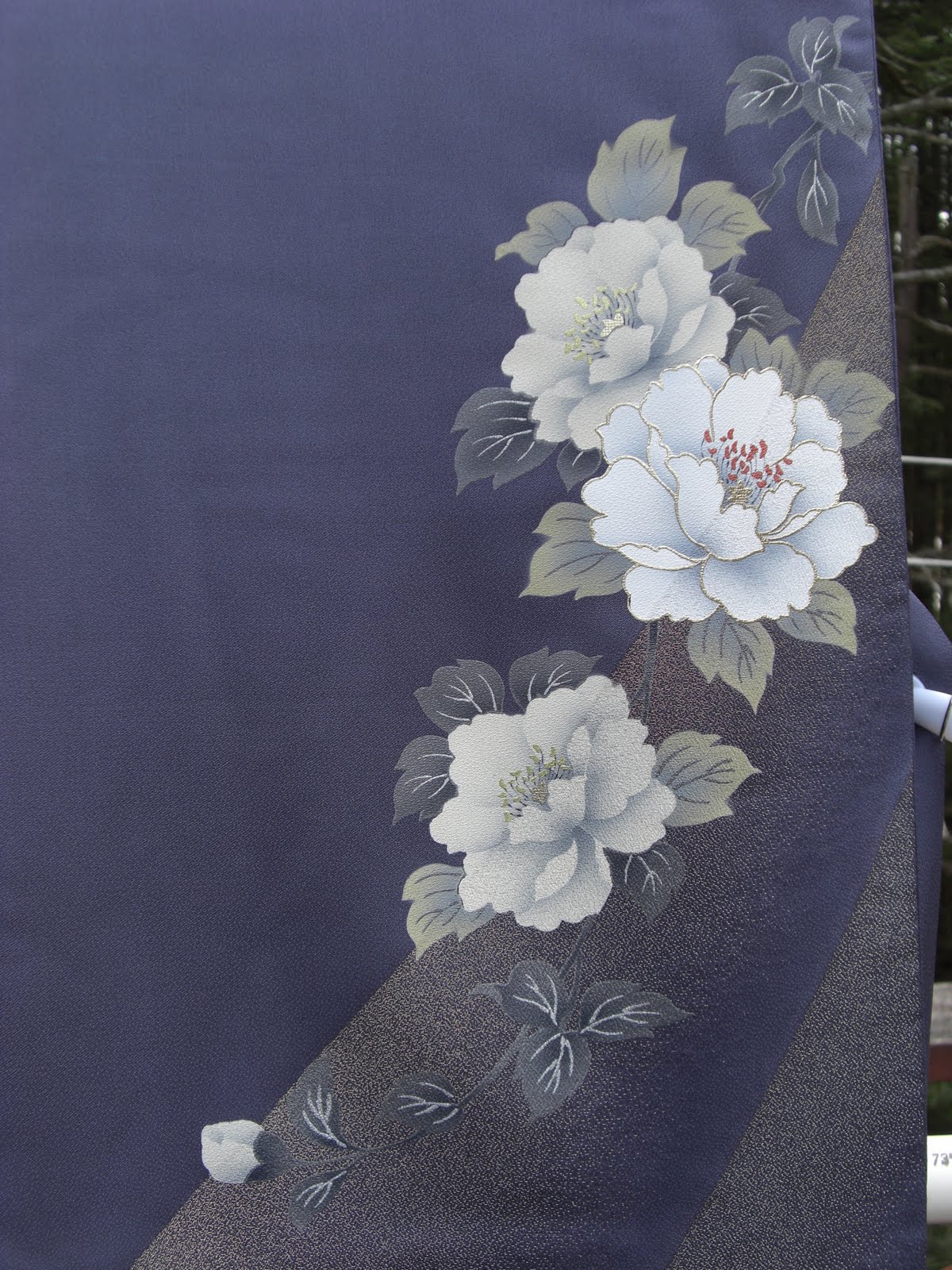
It's a kind of grayed-out shade of purple, with a nice pattern of white tendrils and leaves. For variety, some of the leaves are a very pale green or a brownish-peachey color (the two leaves along the seam near the middle of my second picture are examples, though the colors aren't terribly obvious here). The color is probably a bit too mature for me, seeing as it's rather dark and subdued and I'm only 27, but I like to brighten it up a bit with pink and yellow accessories. I usually wear this with my custom pink obi and the yellow obi age and obi jime I found to go with them.

Friday, May 20, 2011

Friday Photo (a few hours late): Iromuji


When I first got into kimono, I didn't really care much for iromuji. I mean come on, compared to other types of kimono, they're just so plain. One solid color, with the pattern -- if there even is one -- just woven into the fabric? How could that ever compare to a lively komon, an elegant houmongi, or a opulent furisode? Even the relatively staid kurotomesode (which I love, even if I haven't bought one yet) seemed more interesting in comparison. But after a while, iromuji started to grow on me. These days I really like the simple elegance of a nice iromuji and how versatile they are.

Friday, May 13, 2011

Friday Photo: Summer Tsukesage


No close-up shots of the pattern at the moment, I'm afraid. Blogger apparently hates my photos of this kimono and it took me forever just to get it to accept this one.

But anyway, today was quite a bit warmer than any other  day we've had all year and it made me think of summer. Most of my kimono are lined late fall - early spring pieces, but I have a few summer items, like this one. I believe it's a tsukesage based on where and how the pattern falls, but tsukesage are the toughest kimono for me to identify so I'm not entirely certain! It's a mostly-white kimono with areas of a lovely, summery lime green, and mid-to-late-summer flowers like pinks and bellflowers. And the best part? I grabbed it up for 1500 yen (less than $20 at the time) at a little shop in Nara.

Friday, May 6, 2011

Friday Photo: Yukata


I love yukata. Love love love them. And for some reason, it's much easier to find ready-made yukata in my size (or close to my size) than it is any other kind of kimono, even casual polyester ones. Yukata to me represent everything I know about summers in Japan -- the ridiculous heat and the humidity that makes everything cling to your skin, the heavy rains and awesome thunderstorms of the rainy season, the fireworks festivals, Tanabata and all the colorful streamers (and the fact that it happens twice!), the stalls of street food you see at festivals throughout the year. My first experience wearing kimono didn't involve a kimono at all, but rather involved the yukata-dressing class at the language school I attended on my first trip to Japan in 2007. Maybe I'm romanticizing yukata a little too much, but for me every yukata really does bring back a flood of happy memories -- even if it's just a picture of a yukata on the internet or in a magazine.

Friday, April 29, 2011

Photo Friday: Houmongi


Many of my kimono don't really have much of a story attached to them. They were just really pretty and I decided to buy them (or ask for them as a birthday or holiday present). This particular kimono is one of those cases. I got this one as a birthday gift several years ago after seeing it on Ichiroya and falling in love with the motif of Heian nobles. It was in absolutely perfect condition, and though nothing was ever said about where it came from I always kind of figured it never got used -- perhaps it was stock from a store that closed, as were many of the accessories offered for sale around the same time. The design appears to be woven in rather than dyed, painted, or embroidered, and it has design done in gold on the inside of the left panel (last picture). This is one of my favorite kimono, and so far is my only houmongi.

Friday, April 22, 2011

Friday Photo: Furisode


Just a couple of pictures and a story to get this blog rolling. This is a lovely green furisode I bought in Kyoto during my trip there in April 2009. And yes, it has a story!

I have been to Japan a grand total of three times so far. The first trip in the summer of 2007 also saw the beginning of my kimono collection, when I bought my first several pieces (seriously, they covered my bed at home when I laid them out after returning home). I often went to Nagoya on the weekends, and discovered a street near the Uso Kannon shrine filled to bursting with all kinds of second-hand shops, including at least two kimono shops. Before leaving Aichi prefecture for my grand tour through the rest of the country, I made one final trip to Nagoya to visit the kimono shops and see if an item I had previously wanted to buy -- a lovely iro-uchikake (colored wedding kimono) -- but had been short on cash for was still there. The uchikake was still there, but I decided it was too heavy to carry around or ship home and it didn't really interest me all that much anyway*. I wandered into the rest of the shop to see if there was anything else I wanted, and there it was. A gorgeous, deep-green furisode with red, white, and yellow camellias on it. It was perfect, too, not a snag or stain anywhere. But it was $200 or so, the shop didn't take credit cards, and I didn't have the cash for it, so I had to let it go.

Fast-forward to April 2009. My collection had grown substantially in the nearly two years since that visit to Nagoya. I had several other furisode, my iro-uchikake, my awesome houmongi (which you will see later!), more yukata than you can shake a sensu at...but I had never really forgotten about the green camellia furisode, and was still on the hunt for one in that lovely shade of green. I wandered in to the Chicago Harajuku shop on Teramachi-dori and went upstairs to the second level, where they keep the kimono, and began looking around. I found this one with the other furisode near the stairs. It was pretty shocking, really, since it's tough to find kimono that look so much alike. Granted that there are some small differences, but they're similar enough that I felt like it was fate for me to find that green furisode in Kyoto, and bought it immediately.

So now I have my lovely green camellia furisode, and I hope the green camellia furisode from Nagoya went to a loving home.


* This turned out to be a good thing because several months later, I found the iro-uchikake I currently own, and have never once regretted it. In fact, in the four years between buying that uchikake and now, I have only seen one other iro- uchikake I would even remotely consider buying.